How the Inner Team Approach works
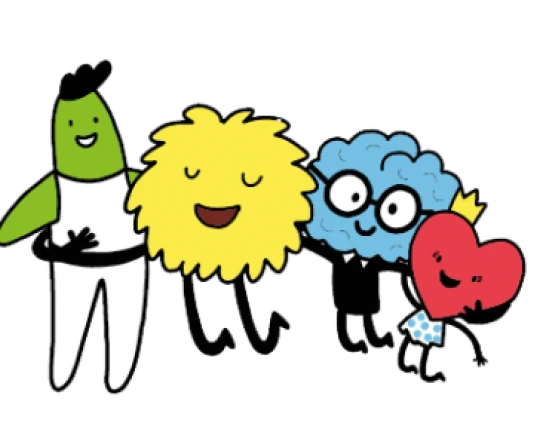
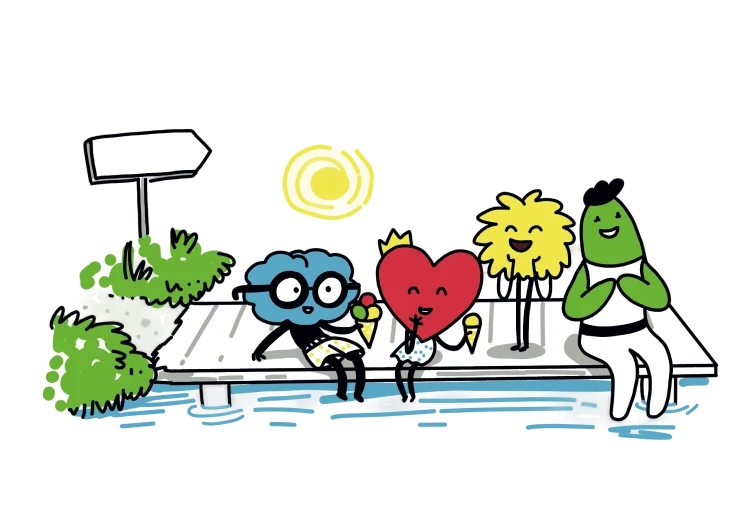
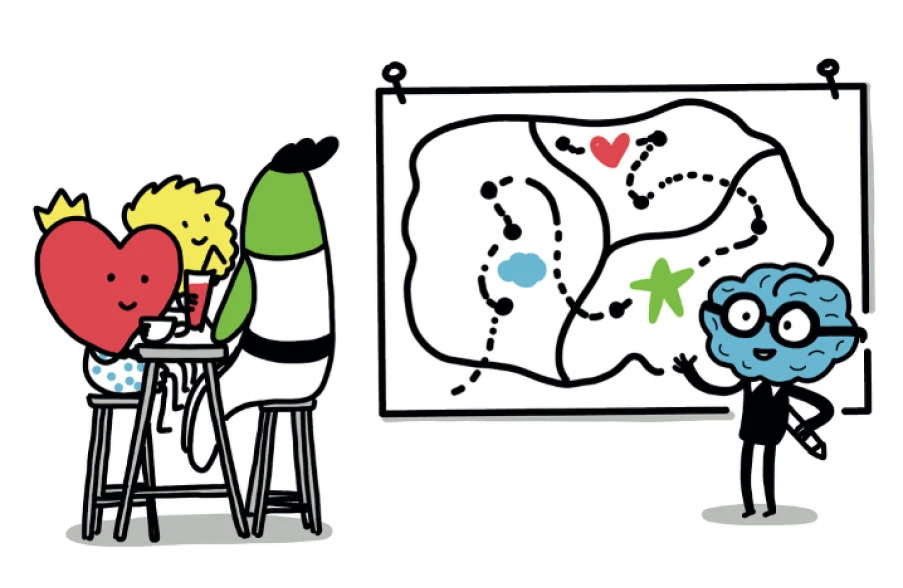
Imagine yourself as a team of different people as you know it from your workplace:
It’s about getting to know the inner team players and involving them according to their strengths.
- We are at our best when all inner team members work together smoothly.
- Then, we are internally balanced and communicate consistently.
- This is the basis for responsible, sustainable leadership.
- When we succeed in smooth inner collaboration, we bring joy and energy to the organizations we are affiliated with.
We work with the full range of human intelligence:
- Cognitive intelligence, to create clarity and meaning
- Emotional intelligence, to access motivation and values
- Somatic intelligence, to include the body as a carrier of patterns
- Systemic intelligence, to understand relational and contextual forces
- Intuitive intelligence, as a source of rapid, non‑linear knowing (i.e. sense‑making beyond analytical reasoning)
At the center of this integration lies structured visualization.Visualization is not a metaphorical add‑on. It is treated as action rehearsal.
A way to externalize unconscious inner dynamics and create inner maps that can be explored, made sense of, and re‑organized with clarity and safety.
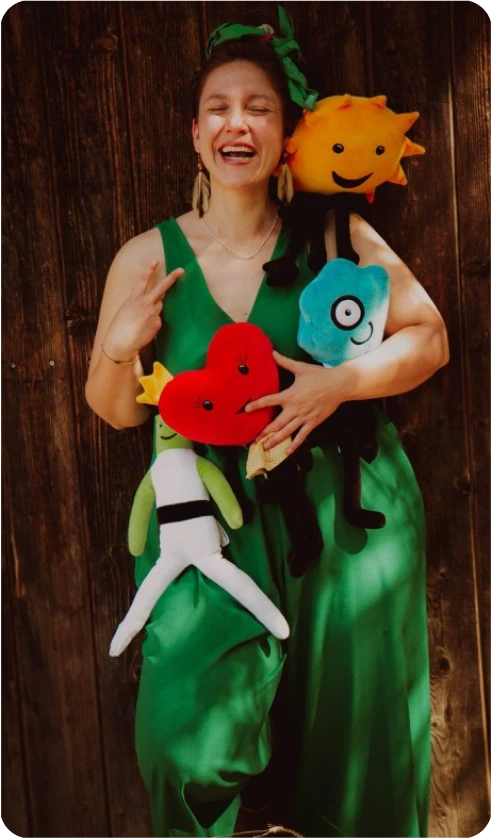
The Formies embodiment toolkit
A distinctive element of the Formies pathway is the use of a physical, embodied (self-)coaching toolkit.
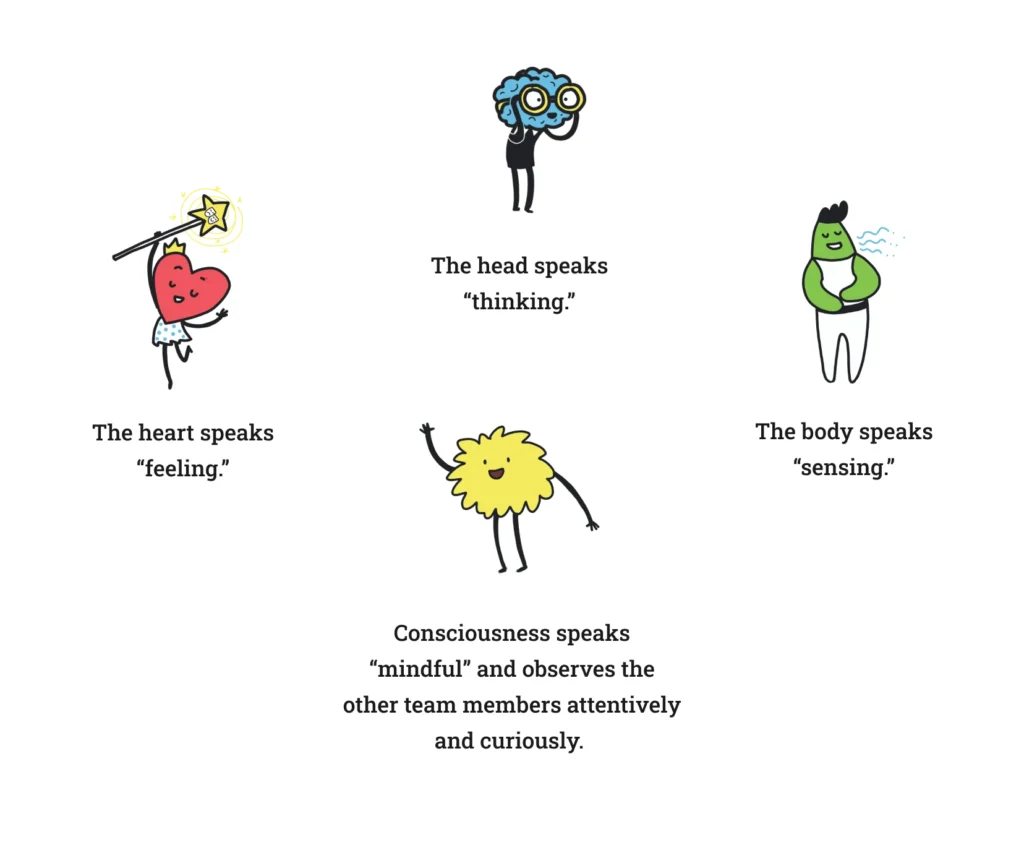
Hand‑held puppets representing Mind, Body, Heart, and Consciousness are used to externalize inner dynamics, enabling us to engage with internal processes in an observable manner.
The puppets are not symbolic props. By engaging with the puppets, we shift from abstract reflection to embodied experience.
Internal processes that are normally unconscious become accessible, supporting clearer awareness, conscious choice, and inner consistency.
Why the Inner Team Approach works
The science behind the inner team approach with the Formies.
Visualization is perceived as ‘action’.
The brain hardly distinguishes between a real action and a visualized one. This creates a neural pathway that is reinforced by repetition, similar to physical training.
Visuals bring emotional and sensory depth
While pure thoughts often remain abstract and cognitive, visualization, including cartoons with their actions, incorporates emotions, feelings, sounds, smells, and bodily sensations. We “fall in love” with our visualized inner team members.
Visuals activate the reticular activating system (RAS)
Energy flows where attention goes: Images are classified as relevant by the brain and selectively perceived via the RAS. This system filters information and directs attention to what corresponds to the inner image such as desired states.
Images are the language of consciousness
Images have a symbolic and direct effect on the subconscious. They are highly emotionally charged. They help us to gain access to our subconscious and transform it to conscious insights.
Visuals help us un-learning and building a new identity
Visualization constantly reminds us of our multidimensional identity and our inherent resources. We are getting used to who we really are and allow team dynamics to work inside us as they do in teams at our workplace.